- Afropolitan
- Posts
- If Spotify and YouTube leave Africa, Afrobeats is finished.
If Spotify and YouTube leave Africa, Afrobeats is finished.

Chika Uwazie
March 18, 2026
That's not a hot take. That's the reality.
Audu Maikori has spent 20 years building Chocolate City the label behind MI Abaga, Ice Prince, and Jesse Jagz. He just closed a $150 million deal with Mavis. He's one of the few people in African entertainment who has seen the industry from every angle: artist development, legal, distribution, investment.
And he's sounding an alarm nobody wants to hear.
We built an entire industry on platforms we don't control. Spotify. YouTube. Apple Music. TikTok. None of them are African owned. None of them answer to us. And any one of them could leave tomorrow.
TikTok just restricted lives in Nigeria last week. No announcement. No negotiation. Just gone.
Netflix already left. Amazon pulled back. The subscriber numbers weren't there. Nigerians share passwords like we share food at parties. We're family oriented. That's beautiful for culture. It's terrible for per-seat licensing models built in Silicon Valley.
So what happens when the economics stop working for the platforms that distribute our music?
They leave. And we're left holding nothing.
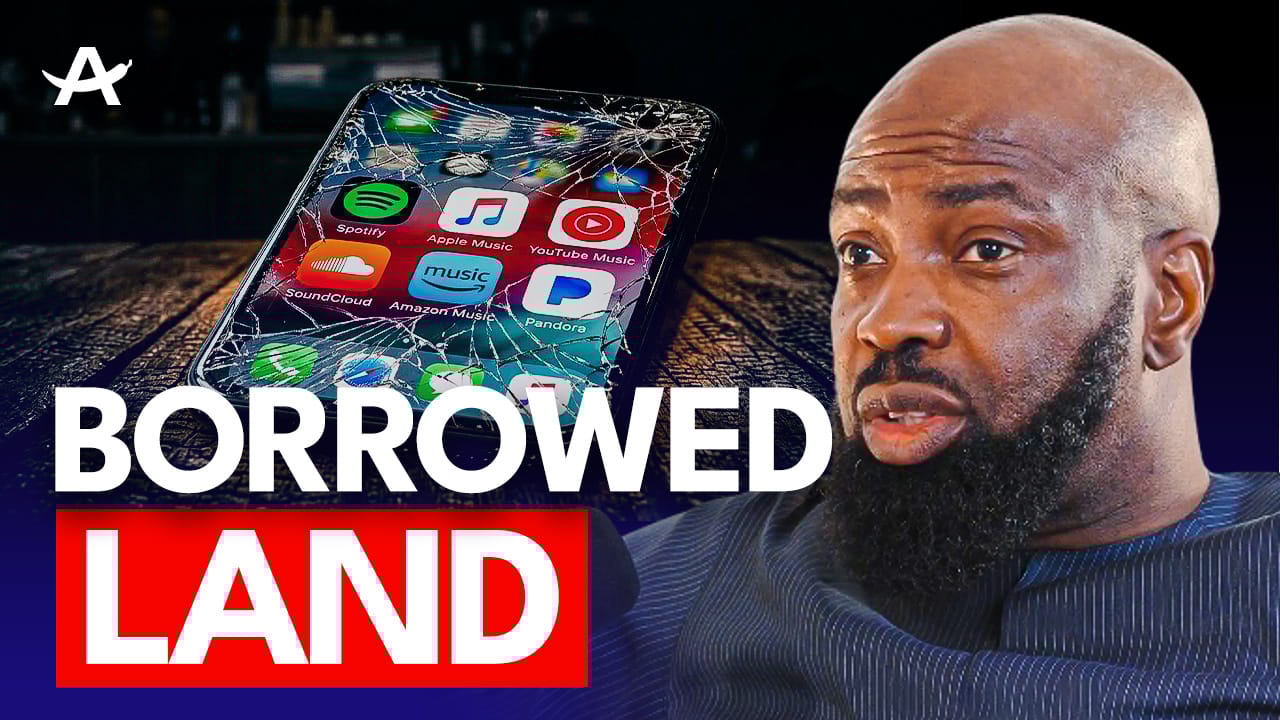
THE OWNERSHIP CRISIS
Here's what most people don't understand about how the music industry actually works.
When a Nigerian artist blows up on Spotify, the streams generate revenue. But where does that money flow? Through systems, contracts, and infrastructure that were designed in America, for Americans.
Under Nigerian law, the moment you create a song and fix it in a medium, you own the copyright. You don't have to register anything. The law automatically protects you.
But here's the problem: America doesn't recognize Nigerian copyright registration. If you want to monetize your music in the US, where most of the streaming money lives you need to register there. Most Nigerian artists don't. Which means when exploitation happens in American markets, Nigerian creators have no legal standing.
Chocolate City learned this the hard way. Years ago, they had a catalog worth millions. Thousands of songs. But none of them were registered in the US. So when investors came to value the company, those assets were worth a fraction of what they should have been. The music existed. The ownership didn't translate.
They've since fixed that. "Loved Nwantiti" crossed a billion streams and it's properly registered. But how many other Nigerian hits are floating in legal limbo? How many artists are generating wealth they'll never be able to claim?
The infrastructure of ownership was never built for us. And we've been too busy celebrating streams to notice.
THE HIP-HOP WARNING
This has happened before.
Hip-hop was born in Black communities. The Bronx. Brooklyn. Atlanta. Houston. The culture, the sound, the style—all of it came from us.
But who owns hip-hop now?
The labels that control the catalogs are mostly white-owned. The streaming platforms are white-owned. The data which determines who gets playlisted, who gets promoted, who gets paid—sits in servers controlled by companies Black artists have no equity in.
The artists got famous. The culture got exported. But the ownership got captured.
Audu sees the exact same pattern playing out with Afrobeats. The sound is African. The artists are African. The fans are global. But the infrastructure that monetizes all of it? That's sitting in Stockholm, San Francisco, and Seattle.
And here's the part that should terrify you: slavery lasted 400 years. Intellectual property ownership lasts forever. Whoever controls the masters today controls them in perpetuity. Their grandchildren will still be collecting checks off music your grandchildren forgot existed.
Physical slavery took our bodies. IP slavery is coming for our creative souls. And we're dancing on TikTok while it happens.
THE REAL OPPORTUNITY
So what's the solution?
Audu's answer is unsexy but urgent: Africans need to build the platforms.
Not another streaming app that competes with Spotify on features. The infrastructure layer. The distribution networks. The data systems. The pipes that move content from creator to consumer and capture value at every step.
Remember Spinlet? iROKING? These were Nigerian streaming platforms that existed before their time. The bandwidth wasn't there. The phones weren't smart enough. The market wasn't ready.
But the market is ready now. And instead of building, we're renting.
Every Instagram story with music playing is a stream. Every TikTok dance is a stream. Every YouTube video, every WhatsApp status streams everywhere, data everywhere, value being created constantly. But Africans don't own any of the systems capturing that value.
The person who builds the African-owned infrastructure for creative distribution won't just get rich. They'll determine whether the next generation of African artists owns their work or just licenses their talent to foreign platforms.
That's the real opportunity. Not another app. Ownership.
THE $150M LESSON
When Chocolate City closed their deal with Mavin, it wasn't just about the money.
The deal represented something that barely exists in African entertainment: a company with 20 years of structured operations, clean books, registered IP, and a catalog that could be properly valued.
Most Nigerian music companies can't get that kind of investment. Not because they lack talent. Nigeria has more musical talent per capita than almost anywhere else on earth. But because the structure isn't there.
No proper contracts. No US registration. No clean cap tables. No auditable financials. Investors look at the opportunity, get excited, then look at the paperwork and walk away.
Chocolate City was different from day one. Audu came from litigation. His brother was a lawyer. They understood that contracts weren't bureaucracy, they were protection. They were the difference between building an asset and building a house of cards.
The first artist Audu ever helped was a guy trapped in a contract with no termination date. Literally signed away forever. One letter from Audu got him out. That experience shaped everything that came after.
When Chocolate City signed Jeremiah Gyang, their first artist, they told him: if anything in this contract doesn't work for you, come back and we'll adjust it. They revised terms multiple times as both sides learned the industry together.
That's how you build something that lasts. Not by locking artists into exploitative deals, but by creating structures that protect everyone including yourself when it's time to exit.
THE DISTRIBUTION GAP
But ownership isn't just about music. It's about everything.
Audu made a point during our conversation that stopped me cold. He looked at my hat and asked how he could buy one.
WhatsApp, I told him.
But he doesn't have my number. So he can't buy it. Transaction over. Value lost.
In America, that hat is on a website. You type in a code. It ships tomorrow. The entire infrastructure of getting products to people is solved.
In Nigeria, there's always a story. Always friction. Always a reason why the thing you want can't get to you efficiently.
Detty December generate officially about $2 million in economic activity. Audu thinks the real number is five or six times that. But nobody knows for sure because there's no system capturing the data. No infrastructure measuring the value. Money is flowing everywhere and we can't even count it.
Paris hosts 2,500 events per day with a population under 10 million. Lagos has 20 million people. How many events happen here? Nobody knows. Which means nobody can sell to those attendees. Nobody can sponsor those events. Nobody can build businesses on top of that activity.
The opportunity isn't another social app. It's the unsexy work of building pipes. Distribution. Logistics. Payment infrastructure. Data capture. The stuff that makes economies actually function.
Whoever solves getting products to people at scale in Nigeria will build the next hundred-billion-dollar company. Not by copying Silicon Valley, but by solving problems Silicon Valley doesn't even understand.
THE WELL
Before Chocolate City, before the deals, before any of it there was a moment that almost broke Audu completely.
April 2004. He's driving home for Easter. Fifteen minutes from his village, his car dies. Engine gone.
He's already in debt. An arbitration course his company refused to pay for is eating three-quarters of his salary. Now he needs money he doesn't have to fix a car that barely runs.
He walks to a well to fetch water. And standing there, covered in dust, watching his dreams leak away like coolant from a busted radiator, he makes a deal with God.
One year. You have one year to change my life. Otherwise, I'm taking that magistrate job.
He'd already pictured what that life would look like. A small compound in Kaduna. A dead Mercedes in the yard. Seven kids with distended bellies. No electricity. Drinking local brew and swatting flies until he died.
That was the safe path. That was what giving up looked like.
Twelve months later, Chocolate City had a top 10 hit in Lagos.
The well didn't change. The car didn't magically fix itself. What changed was his willingness to bet everything on a vision nobody else could see.
THE VISION PROBLEM
That's the real lesson from Audu's story. Not the success… the seeing.
He told me about a flight he took once. Middle seat. He glanced up and realized he could see the phone screen of someone across the aisle. Every word they were typing. But the person sitting right next to that passenger couldn't see it. The person in front couldn't see it.
Same plane. Same moment. Completely different views.
That's what vision is. You're positioned to see something nobody else can see from where they're standing. And no amount of explaining will give them your exact perspective.
When Audu told MI that Styl-Plus was on the way out, nobody believed him. Styl-Plus was the biggest group in Nigeria. MI was nobody. But Audu wasn't looking at what was. He was looking at what was coming.
When his friends asked "you get this bar?" they were looking at his law degree, his stable job, his predictable future. He was looking at an industry about to explode and a gap he was uniquely positioned to fill.
Your family will never fully see your vision. Your friends won't either. They can't, they're not sitting in your seat.
Build anyway.
THE QUESTION
Audu's been doing this for 20 years. He's seen artists come and go. Labels rise and fall. Fortunes made and lost.
And he keeps coming back to the same question: Who owns the infrastructure?
Not who's famous. Not who's trending. Not who has the most streams this week.
Who owns the systems that make all of it possible?
Right now, the answer is: not us.
Spotify is Swedish. YouTube is American. Apple is American. TikTok is Chinese. The entire machinery of African music distribution is foreign-owned.
That can change. But only if we stop celebrating access and start building ownership.
The next Chocolate City won't be a label. It'll be a platform. African-built. African-owned. Capturing value for African creators instead of extracting it.
The question is: who's going to build it?
Watch the full episode
Audu breaks down 20 years of building Chocolate City, the ownership crisis threatening African music, why distribution is the biggest untapped opportunity, and the moment by a well that changed everything.
THE AI CHIEF OF STAFF FOR BUILDERS
Most AI "meeting assistants" are just glorified tape recorders. They drop an awkward bot into your Zoom call, send your data to the cloud, and then leave you with a transcript you still have to copy-paste into ChatGPT to get anything useful.
Quill changed the game for me.
It lives on your desktop, not in the cloud. No bots, no data leaks, and zero "download-and-paste" rituals. I use it to run every meeting and every podcast episode. By the time I hang up, the work—PRDs, follow-up emails, and Linear tickets—is already drafted right inside the app.
If you're still doing the manual work after your meetings, you're working too hard.
Join the Afropolitan community on Quill for free
Want access to experts like Audu?
What if you could do more than just listen to the people who've built?
Convo by Afropolitan lets you book 1-on-1 video calls with in-demand experts from Africa and the diaspora. Founders. Investors. Operators. The people shaping the future.
Sometimes one conversation changes your entire path.
AUNTY'S SCULPTURE COLLECTION
A limited collection by Anthony Azekwoh x Afropolitan. 200 pieces. Application only.

LISTEN ON SPOTIFY | APPLE PODCASTS
This episode is brought to you in partnership with:
Vban — the borderless banking app built for Africa's digital workforce. Use the code AFROPOLITAN to sign up
Subscribe to never miss these conversations: → YouTube, Apple Podcasts and Spotify
NEW: Connect with Industry Experts on Convo
Get 1:1 time with African founders and entrepreneurs like who have been where you’re trying to go.
If this conversation moved you, share it with one person who needs to hear it.
And reply to this email: What would you build if you owned the platform?
Warmly,
Chika & Eche
Co-Hosts, Afropolitan Podcast